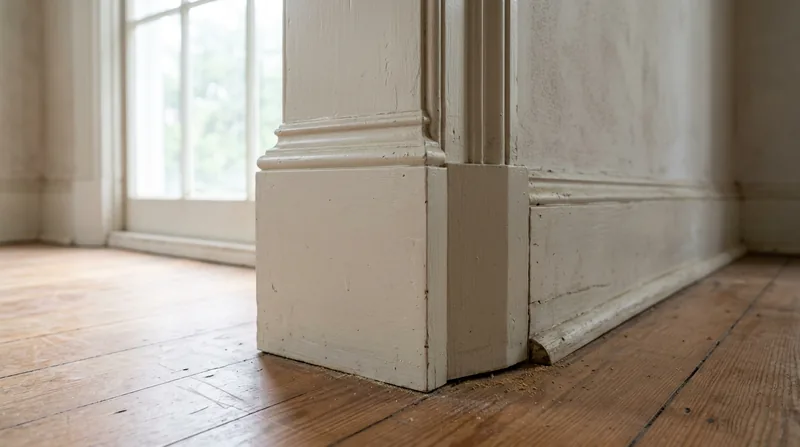




Savannah's architectural heritage, from Federal townhouses with deep cornices around the historic squares to Queen Anne Victorians with gingerbread porches and Craftsman bungalows on oak-lined streets, depends on the precision work that finish carpenters deliver. Finish and trim carpentry in Savannah is not cosmetic detail work, it is the craft that separates a well-built home from one that looks and performs like it was assembled. Crown molding that runs true, baseboards that scribe perfectly to uneven plaster, door casings with consistent reveals, and wainscoting that sits flush and level are the visible marks of a carpenter who understands both the old plaster walls of the Historic District and the modern framing of newer homes across Pooler and Richmond Hill. The humidity and seasonal shifts in our climate demand work that fits tight and stays tight. We handle casing, trim, paneling, and custom millwork throughout Savannah homes, old and new, with the precision that period architecture and contemporary finishes both require.
Why Precision Trim and Casing Matter in Savannah Homes
Finish carpentry is where the bones of a house meet the eye. In Savannah, where many homes sit above high water tables on brick piers or have settled over decades, walls and door frames are often out of plumb and out of square. A finish carpenter who simply measures once and cuts once will deliver gaps, light lines, and trim that looks crooked even when it is straight. Tight miters, scribed fits, and consistent reveals require skill, patience, and the right tools. The Savannah climate, with its hot summers, humidity, and occasional freezes, also means wood moves seasonally. Trim installed without accounting for that movement will cup, crack, or separate at the joints.
- Crown molding that runs at a true 45-degree miter and sits flush to both wall and ceiling without visible gaps or light lines.
- Baseboard and shoe molding scribed to follow the contour of uneven plaster or drywall, eliminating the need for caulk and paint to hide a poor fit.
- Door casing and window trim with consistent reveals on all four sides, even when the frame itself is slightly racked or the wall is wavy.
- Wainscoting and paneling installed level and plumb, with joints that are tight and aligned regardless of the condition of the substrate.
- Custom trim profiles milled on-site or pre-finished to specification, then installed with precision hardware and fastening that holds through seasonal wood movement.
Proper finish carpentry means the trim stays tight, the joints stay closed, and the work looks as good in ten years as it does on the day we leave.
Local reality: Savannah's older homes in the Historic District, Thomas Square, and Ardsley Park often have plaster walls that have settled unevenly and door frames that are slightly out of square. A carpenter who does not scribe and fit trim to these conditions will leave visible gaps and light lines that catch the eye every time you walk past. Coped joints and scribed baseboard are not luxuries in Savannah, they are the standard for work that lasts and looks right.
For more information on how we address structural issues that can affect trim installation, see our framing and structural carpentry page.
How We Approach Finish and Trim Carpentry in Savannah
Every finish carpentry job begins with understanding the existing structure. We assess the condition of walls, frames, and existing trim, take accurate measurements, and identify any plumb or level issues before we order material or cut a single piece. In older Savannah homes, this means accounting for settled walls, shifting joists, and the quirks that come with age. In newer homes, it means working with modern framing that may be slightly out of tolerance. We then work methodically through the installation, scribing where necessary, coping joints where they meet, and fastening in ways that allow for seasonal wood movement without opening seams.
- We measure the space multiple times and verify plumb and level before ordering any trim stock or millwork.
- We select and mill material appropriate to the room, species, and finish, accounting for local humidity and seasonal movement.
- We cut and fit trim in place, scribing to walls and existing trim as needed, and test fit before final fastening.
- We install trim with finish nails, screws, or adhesives appropriate to the application, and set fasteners so they can be puttied and painted seamlessly.
- We sand, prime, and finish all trim as specified, or prepare it for the customer's finish carpenter or painter.
This process takes longer than simply nailing up pre-cut trim, but it delivers work that fits tight and stays tight for years.
Example from Savannah: A homeowner in Ardsley Park was installing new interior doors and wanted crown molding in the same room. The plaster walls had settled over the decades and the ceiling was slightly wavy. We scribed the crown molding to follow both the wall and ceiling contours, cut coped joints where the molding met the existing trim at the doorway, and installed it with finish nails set below the surface. The result was trim that sat flush and tight, with no visible gaps or light lines, even in the afternoon light that filters through the live oaks outside.
See our crown molding and baseboard installation page for more on this specialized work.
| Approach | Description | Best for |
|---|---|---|
| Scribing and fitting | Trim is cut and fit in place to match the contour of the wall, ceiling, or existing trim, eliminating gaps and light lines. | Older homes with wavy plaster, uneven walls, or out-of-plumb door frames; any room where a tight, seamless fit is the goal. |
| Coped joints | The end of one trim piece is shaped to fit over the face of the adjoining piece, creating a seamless joint that remains tight as wood moves seasonally. | Crown molding, baseboard, and any trim that runs around corners or meets existing trim at an angle. |
| Miter and biscuit | Two trim pieces are cut at matching angles and joined with a loose wood biscuit, glue, and fasteners, creating a seamless 45-degree joint. | Outside corners, picture frame molding, and custom trim where a perfect miter is visible and essential. |
| Custom milling | Trim profiles are milled on-site or pre-milled off-site to match existing molding, period details, or custom specifications, then installed with precision. | Historic homes requiring matched molding, custom wainscoting, or trim that replicates original details in the Historic District or Victorian neighborhoods. |
| Paneling and wainscoting | Wall panels or wainscoting are installed level and plumb with tight joints, then finished with cap rail and base trim that is scribed and fitted. | Rooms where period character or architectural detail is desired, or where wainscoting adds visual interest and protects walls from wear. |
Finish and Trim Carpentry Cost in Savannah: What to Expect
The cost of finish carpentry in Savannah depends on the scope of the work, the complexity of the fit, and the material selected. Simple baseboard and casing in a straightforward, plumb room with modern drywall starts at around $550 to $800 per room, including material and labor. Crown molding, scribed baseboards, coped joints, and custom trim work cost more because they require skill, time, and often multiple trial fits. A full room with crown molding, baseboard, wainscoting, and door casing can run $2,500 to $5,000 or more depending on the perimeter, material, and fit complexity. Older homes in the Historic District or Ardsley Park, where walls are uneven and trim must be scribed to fit, typically cost 20 to 30 percent more than new construction because the fitting work is more demanding.
Factors that affect the final cost include the linear feet of trim to be installed, the profile and material selected (painted pine, stain-grade hardwood, custom milled trim), the condition and plumb of the existing walls and frames, the number of inside and outside corners, and whether existing trim must be removed or matched. Getting 2 or 3 estimates from local carpenters is the best way to understand the range for your specific project. Visit our pricing page for a detailed breakdown of typical jobs and what drives costs up or down.
Travel is included in all estimates throughout Savannah and surrounding areas like Pooler, Richmond Hill, Rincon, Garden City, Port Wentworth, Tybee Island, Thunderbolt, Bloomingdale, Wilmington Island, Isle of Hope, Skidaway Island, Hinesville, Guyton, Midway, and Statesboro. We provide free estimates with no obligation to book, and we respond within 24 hours at (912) 446-6703.
Finish and Trim Carpentry Near Me: What to Look for When Hiring a Local Carpenter
Finding a finish carpenter who can deliver tight, professional work requires more than a quick internet search. Look for a carpenter or small shop that has experience with the type of homes and trim work you need. In Savannah, that means someone who understands both the plaster walls and period details of older homes and the modern framing and drywall of newer construction. Ask to see examples of crown molding, baseboards, door casing, and any custom trim work they have done. Look closely at the joints, miters, and reveals. Ask about their approach to fitting trim in older homes, how they handle out-of-plumb walls, and what they do when a scribe or cope is necessary.
Check that the carpenter is fully insured and carries liability coverage. Ask for references from recent jobs in Savannah, and contact at least two of them to ask about the quality of the work and whether the trim has held up well. Understand the permit requirements for your specific project by contacting the Savannah Building Department or your local permitting office. If you live in a historic district or under an HOA, confirm any restrictions on trim materials, finishes, or installation methods before work begins. Get a detailed written estimate that includes material, labor, timeline, and any assumptions about the condition of the existing walls or frames. A clear estimate protects both you and the carpenter.
Call us at (912) 446-6703 or contact us online for a free estimate. We will walk through your project, explain our approach, and provide a realistic timeline and price with no obligation to book.
Finish & Trim Carpentry in Savannah: Pricing Guide
| Service | Price | Details |
|---|---|---|
| Baseboard and casing, single room | Starting at $550 | Simple baseboard, shoe molding, and door casing in plumb walls, modern drywall, painted finish |
| Crown molding, single room | Starting at $800 | Crown molding with coped joints and consistent reveals; cost rises with ceiling height, wall condition, and fit complexity |
| Wainscoting and paneling | Starting at $1,200 | Wall panels installed level and plumb with cap rail and base trim; linear feet and profile complexity drive final cost |
| Full-room trim package | Starting at $2,500 | Crown molding, baseboard, wainscoting, and door casing throughout one room; scribed and fitted to existing conditions |
| Custom milling or historic matching | On estimate | Custom trim profiles milled on-site or pre-milled to match existing molding; requires on-site assessment to price accurately |
| Estimate and travel | Free | No obligation estimate, 24-hour response, travel included throughout Savannah and surrounding service areas |
Indicative pricing, the exact cost depends on square footage, finish, and site access. Free personalized estimate within 24h at (912) 446-6703.


