Why Homeowners in Savannah Confuse Dry Rot and Termite Damage
If you own a home in Savannah, you've probably heard warnings about both dry rot and termite damage. These two wood-destroying threats are often mentioned in the same breath, and for good reason: they both compromise the structural integrity of your home and can cost thousands to repair. But here's the thing: they're caused by completely different culprits, they progress at different rates, and they require different treatment approaches.
The confusion is understandable. Both conditions leave wood soft, weakened, and sometimes crumbly. Both thrive in the humid, warm climate that Savannah is known for. And both can hide inside walls, under floors, and in crawl spaces for months or even years before a homeowner notices anything is wrong. But the difference between dry rot vs termite damage is crucial to understand, because misidentifying the problem means choosing the wrong solution.
What Does Wood Rot Look Like: The Dry Rot Profile
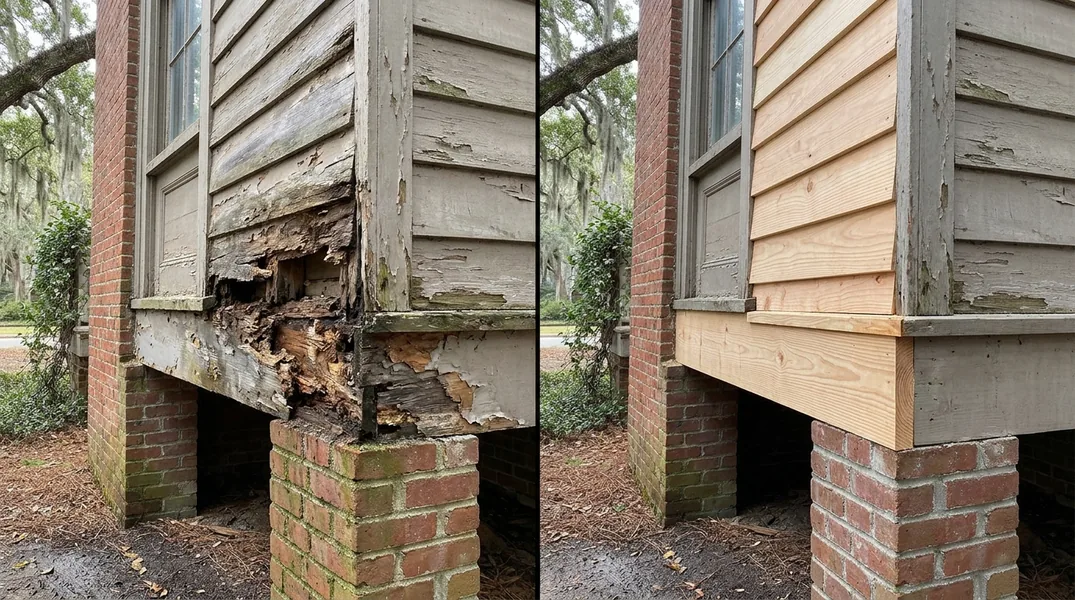
Dry rot is caused by a fungus, not an insect. Despite its name, dry rot actually requires moisture to develop, though it thrives in wood that's damp but not saturated. The fungus feeds on the cellulose in wood fibers, essentially breaking down the wood from the inside out. This is why what does wood rot look like is so distinctive once you know what to look for.
When you examine wood affected by dry rot, you'll typically see wood that's darkened, often turning dark brown or even black in color. The wood becomes brittle and cracks in a distinctive cubical pattern, almost like a checkerboard. Run a screwdriver or knife across the surface, and it will crumble or flake away easily. Dry rot also produces a musty, earthy smell that's quite recognizable once you've encountered it. You might also notice thin, thread-like strands of fungal growth (called mycelium) on the wood surface or nearby materials. In advanced cases, the wood becomes so weakened that it loses its structural capacity entirely.
The key characteristic of dry rot damage is that it tends to be localized to areas with persistent moisture problems. Leaking roofs, faulty gutters, plumbing leaks, poor ventilation in crawl spaces, and water seepage through foundation cracks are common culprits. If you suspect Wood Rot & Dry Rot Repair is needed in your home, look for these moisture sources first.
Signs of Termite Damage in Wood: What to Look For
Termite damage tells a very different story. Termites are wood-eating insects that tunnel through wood as they consume it for food and shelter. Unlike dry rot, which creates visible surface crumbling and discoloration, termite damage is often hidden inside the wood itself. This is what makes signs of termite damage in wood trickier to spot for the untrained eye.
When termites bore through wood, they create networks of tunnels and galleries inside the wood structure. From the outside, the wood might look relatively normal, but inside it's been hollowed out like a maze. If you tap on termite-damaged wood with a hammer, it often sounds hollow. The wood may also sound papery or dull rather than solid. Termite damage typically leaves the wood surface relatively intact, which is why it can progress undetected for so long.
Another telltale sign of termite activity is the presence of mud tubes. Subterranean termites (the most common type in the Southeast) build pencil-thin mud tubes along foundation walls, piers, and other surfaces as they travel between their nest in the soil and their food source in your home. These tubes protect the termites from exposure and drying out. You might also see discarded termite wings near windowsills or light fixtures during swarming season, or notice small piles of termite droppings (called frass) that look like sawdust or sand. Unlike dry rot, termite damage doesn't typically produce a strong smell, and the wood doesn't crumble in the same way.
Comparing Wood Rot vs Termite Damage: Key Differences
Understanding the differences between wood rot vs termite damage is essential for getting the right repair solution. Let's break down the most important distinctions.
Damage Pattern: Dry rot creates visible surface damage with distinctive cubical cracking and darkening. Termite damage hollows out the interior of wood while leaving the surface relatively intact. Smell: Dry rot produces a musty, earthy odor. Termite damage typically has no distinctive smell. Progression: Dry rot spreads through fungal growth and requires moisture to continue developing. Termites actively feed and tunnel, so they can cause damage more rapidly in some cases. Location: Dry rot concentrates in areas with moisture problems. Termites can be found anywhere in your home if they've established a colony.
Another critical difference is how each problem is treated. Dry rot requires eliminating the moisture source and removing the affected wood, followed by proper ventilation and prevention measures. Termite damage requires professional pest control treatment to eliminate the colony, followed by structural repairs. Attempting to treat one condition as if it were the other will waste time and money while leaving your home vulnerable.
How to Identify Which Problem You're Facing
The best way to know for certain whether you're dealing with dry rot or termites is to have a professional inspection. However, you can do some detective work yourself. Start by examining the affected wood closely. Is the damage visible on the surface with clear darkening and cracking? That points to dry rot. Is the surface relatively intact but the wood sounds hollow when tapped? That suggests termites. Look for mud tubes, wings, or frass around the damaged area. Check for moisture sources like leaks, poor drainage, or high humidity.
Pay attention to where the damage is located. Termite damage is often found in Floor Joist & Subfloor Repair areas, basement walls, and the sill plates where your home's frame meets the foundation. Dry rot tends to cluster around specific moisture problems like leaking roofs, bathroom areas, or crawl spaces with poor ventilation. Termites also tend to follow patterns based on their tunneling behavior, often creating damage that runs along grain lines or structural members.
If you're still uncertain after your initial inspection, don't guess. Call a professional. The cost of a thorough inspection is minimal compared to the expense of treating the wrong problem or allowing either condition to worsen.
Wood Rot & Dry Rot Repair Near Me: When to Call a Professional
If you've identified wood rot or suspect termite damage in your Savannah home, professional assessment and repair is the right move. Both conditions can compromise your home's structural safety, and both require expertise to fix properly. Wood Rot & Dry Rot Repair involves not just replacing damaged wood but also identifying and eliminating the moisture source that caused the problem in the first place. Termite Damage Repair requires coordination with pest control professionals and then structural restoration.
Savannah Carpentry specializes in identifying and repairing both types of wood damage. Our team can quickly determine what you're dealing with, assess the extent of the damage, and recommend the most cost-effective repair approach. We handle everything from minor repairs to major structural work, including Beam Replacement & Load-Bearing Wall Removal when necessary. The sooner you address wood damage, the less expensive it typically becomes. Delaying a repair decision often means the problem spreads, requiring more extensive (and more expensive) work down the road.
Contact Savannah Carpentry today at (912) 446-6703 to schedule your free estimate. We'll inspect your home, identify the problem, and give you a clear picture of what needs to be done and what it will cost. Don't let wood damage compromise your home's safety or value.
Looking for a professional carpentry contractor in Savannah? Savannah Carpentry responds fast for all your carpentry needs.
Get a Free QuoteOur services: Wood Rot & Dry Rot Repair · Termite Damage Repair · Floor Joist & Subfloor Repair