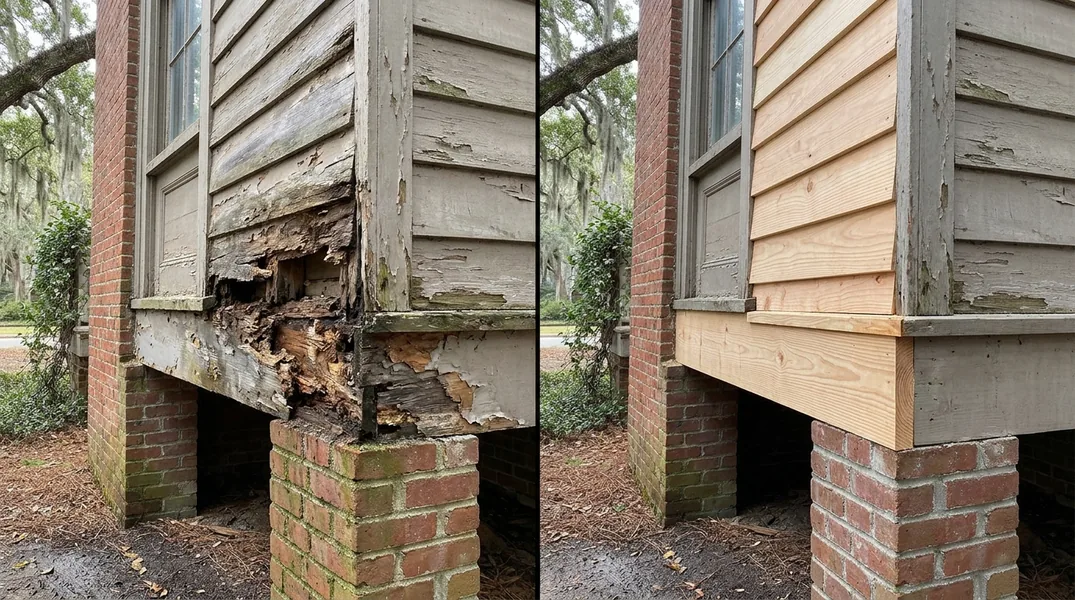
Why Victorian and Craftsman Homes Demand Different Maintenance
Owning a Victorian District house or an Ardsley Park bungalow in Savannah is a privilege that comes with real responsibility. These homes, many built in the late 1800s and early 1900s, were constructed with materials and methods that differ significantly from modern construction. Their beauty and character are undeniable, but that charm comes with specific maintenance challenges that most homeowners discover only after they've owned the property for a season or two.
The wood framing, siding, and structural elements in historic homes are often more vulnerable to environmental stress than newer construction. Savannah's humid subtropical climate, combined with the salt air from nearby coastal areas, creates ideal conditions for wood deterioration. Unlike modern homes with pressure-treated lumber and synthetic materials, Victorian and Craftsman homes rely on solid wood throughout, which requires proactive care to prevent costly damage down the line.
Understanding Wood Rot and Dry Rot in Historic Homes
Wood Rot & Dry Rot Repair is one of the most common issues facing historic homeowners in the area. Wood rot occurs when moisture penetrates wood fibers, allowing fungi to break down the cellulose that gives wood its strength. In Savannah's climate, where humidity levels regularly exceed 70 percent, wood rot isn't a matter of if, but when. The good news is that early detection and professional intervention can save thousands of dollars in structural repairs.
Dry rot, despite its name, also requires moisture to develop. It's a specific type of fungal decay that can spread rapidly through wood, even in areas that seem relatively dry. Historic homes are particularly susceptible because their wood was never treated with modern fungicides, and the gaps and cracks that develop over a century provide perfect entry points for moisture and spores. Common signs include soft, spongy wood, discoloration, and a musty odor in basements, attics, or crawl spaces. If you notice these warning signs, a professional inspection is essential before the problem spreads to load-bearing elements.
Wood Siding Repair: Protecting Your Home's First Line of Defense
The exterior wood siding on Victorian and Craftsman bungalows is far more than decoration. It's the primary barrier between your home's interior and the elements. Original wood siding, whether it's narrow clapboard, shingles, or decorative trim, requires regular inspection and maintenance to remain effective. Many homeowners underestimate how quickly water damage can progress once it penetrates the siding.
Wood siding repair should never be postponed. Small cracks, peeling paint, or soft spots that yield to finger pressure are early warning signs that moisture is beginning its work. In historic homes, the siding is often nailed directly to wooden sheathing without modern moisture barriers, making proper maintenance even more critical. Professional wood siding repair addresses not just the visible damage, but the underlying moisture issues that caused it. This might involve replacing damaged boards, resealing joints, repainting with appropriate finishes, and ensuring proper drainage around the home's foundation and roof lines.
Structural Issues: Floor Joists, Subfloors, and Beyond
Many homeowners are shocked to discover that the soft spot in their Victorian kitchen floor isn't just cosmetic. Deteriorating Floor Joist & Subfloor Repair is a serious structural concern that requires immediate professional attention. Floor joists are the horizontal beams that support your home's weight. When they rot, the entire structural integrity of that section of the house is compromised. A sagging floor, squeaking boards, or visible movement is a red flag that demands urgent inspection.
The foundation and support structure of a century-old home has already settled and shifted countless times. Adding wood rot to the equation creates unpredictable structural behavior. In some cases, Beam Replacement & Load-Bearing Wall Removal may be necessary to restore safety and stability. This is not a DIY project. Structural repairs require engineering knowledge, proper permits, and the skill to work with existing systems while maintaining the home's integrity. Attempting shortcuts on structural repairs can lead to catastrophic failure and endanger everyone in the home.
Preventing Pest Damage: Beyond Wood Rot
While wood rot is a primary concern, historic homes in Savannah face another silent threat: termites and wood-boring insects. The same conditions that promote fungal decay also attract pests looking for a meal. Termite Damage Repair can become necessary when infestations go undetected for months or years. Termites are particularly destructive because they work inside the wood, often leaving the exterior surface intact while hollowing out the interior.
Prevention is always more cost-effective than repair. Regular inspections of crawl spaces, basements, and exterior wood elements can catch pest activity before significant damage occurs. Maintaining proper drainage, keeping wood away from soil contact, and addressing any wood rot immediately all contribute to pest prevention. If you suspect termite activity or notice wood damage that might be pest-related, professional inspection is essential. Early detection can mean the difference between a minor treatment and a major structural repair project.
Historic Home Maintenance: A Long-Term Investment Strategy
Owning a Victorian or Craftsman home is a commitment to preservation and ongoing maintenance. Rather than viewing repairs as unexpected expenses, successful historic homeowners treat them as planned investments in their property's longevity. A simple annual inspection routine, performed by someone who understands historic construction, can identify emerging problems before they become emergencies. This might include checking basement and crawl space conditions, inspecting exterior wood and paint, looking for signs of pest activity, and ensuring gutters and downspouts are functioning properly.
The key to avoiding catastrophic repairs is catching problems early. A small area of soft wood in a siding board is far cheaper to fix than replacing an entire wall section after rot has spread to the framing. Similarly, addressing a minor moisture issue in a crawl space is simpler than dealing with structural damage to floor joists. If you're unsure about your home's condition or you've noticed signs of wood damage, reaching out for a free estimate from Savannah Carpentry is a smart first step. You can also call us at (912) 446-6703 to discuss your specific concerns. Our team understands the unique challenges of historic homes and can help you develop a maintenance plan that protects your investment for decades to come.
Looking for a professional carpentry contractor in Savannah? Savannah Carpentry responds fast for all your carpentry needs.
Get a Free QuoteOur services: Wood Rot & Dry Rot Repair · Termite Damage Repair · Floor Joist & Subfloor Repair