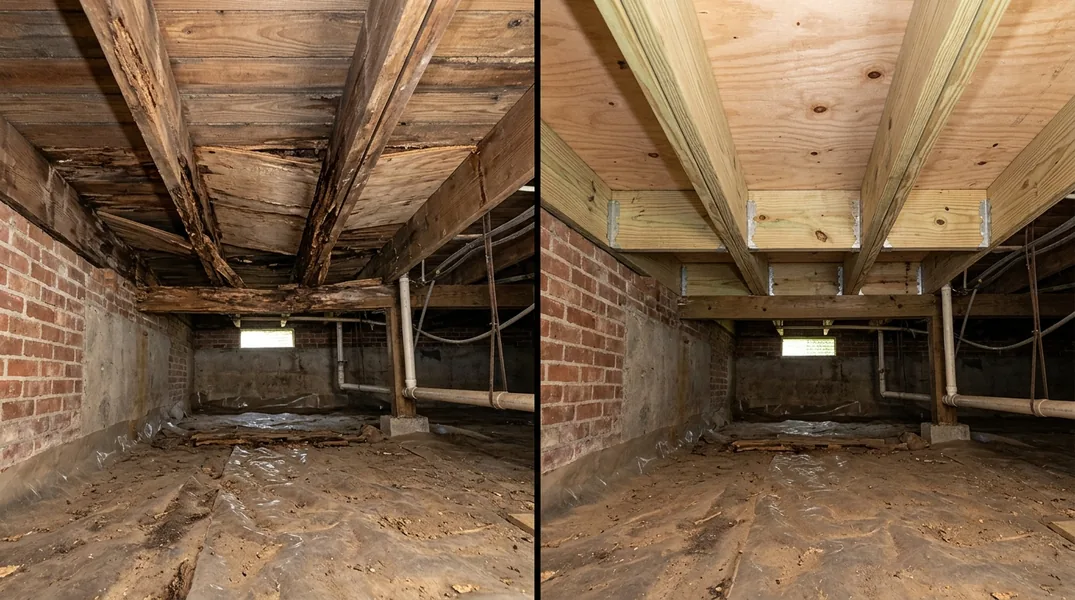
Why Is My Floor Sagging? The Savannah Crawlspace Connection
If you own an older home in Savannah, you've probably noticed a slight bounce or slope to your hardwood floors. That spongy feeling underfoot isn't just annoying, it's a red flag. Sagging floors in historic Savannah homes are almost always rooted in one problem: moisture in the crawlspace.
Our coastal climate means humidity and dampness are constant threats to wooden structural components. When crawlspace moisture levels climb above 60 percent relative humidity, wood begins to absorb water. This moisture weakens the cellular structure of floor joists, causing them to lose their load-bearing capacity. Over time, joists that were once rigid enough to support your furniture and footsteps begin to deflect and settle. The result is the telltale sag you feel when walking across the room.
The problem compounds when moisture combines with wood rot. Wood Rot & Dry Rot Repair becomes necessary when fungi colonize damp wood, literally consuming the material from the inside out. A joist that looks solid on the surface may be spongy and structurally compromised beneath the paint or finish.
Brick Piers, Settlement, and Structural Failure
Many older homes in Savannah rest on brick pier foundations rather than continuous concrete. These masonry supports were state-of-the-art in the 1800s and early 1900s, but they're vulnerable to the same moisture problems that plague crawlspaces. When water infiltrates the brick, the mortar joints deteriorate, and the piers lose their ability to sit level and stable.
As brick piers settle unevenly, the floor system above them loses support. One section of the house may drop an inch or more while neighboring areas remain relatively level. This uneven settlement creates the dramatic sags that make you feel like you're walking downhill in your own living room. The stress this places on floor joists is immense. Joists that were designed to carry load vertically now must resist bending and torsion caused by uneven support. Cracks appear in drywall, doors stick in their frames, and the structural integrity of the entire first floor becomes compromised.
Addressing brick pier settlement often requires Beam Replacement & Load-Bearing Wall Removal work to properly re-level and reinforce the foundation. This is not a DIY project. The structural implications are too serious, and the work requires engineering expertise and proper permitting.
Floor Joist Repair and Sistering: Real Solutions for Sagging Floors
Floor Joist & Subfloor Repair is the most common remedy for sagging floors caused by moisture and rot damage. When joists are weakened but not completely destroyed, sistering is an effective repair method. Sistering involves fastening a new, pressure-treated joist alongside the damaged one, creating a composite beam that shares the load. The new joist is bolted or screwed to the existing joist at regular intervals, typically every 16 inches, creating a strong bond that restores load-bearing capacity.
The beauty of sistering is that it can often be done without removing the floor above. Contractors work from the crawlspace, installing sister joists alongside the compromised ones. The process requires careful measurement, proper fastening techniques, and often temporary support beams to distribute weight during the repair. When done correctly, sistering can restore a sagging floor to level or near-level condition without the cost and disruption of full joist replacement.
However, sistering isn't always the right answer. If a joist is more than 50 percent compromised by rot, or if multiple joists in the same bay are damaged, full replacement may be necessary. A professional inspection is essential to determine which repair strategy will actually solve your problem and keep your home safe for years to come.
Crawlspace Moisture Control: The Foundation of Prevention
You can repair sagging floors, but if you don't address the moisture source, the problem will return. Crawlspace moisture control is not optional for homeowners in our humid climate. The first step is understanding where moisture is coming from. Common sources include standing water, poor drainage around the foundation, inadequate ventilation, and plumbing leaks that go unnoticed for months.
A proper crawlspace should have a vapor barrier (typically 6-mil polyethylene sheeting) installed over the soil to prevent ground moisture from rising into the wood structure above. Vents should be sized and positioned to allow air circulation without creating drafts that draw in humid outdoor air. In some cases, a dehumidifier or small exhaust fan may be necessary to keep relative humidity below 60 percent. Gutters and downspouts should direct water at least 4 to 6 feet away from the foundation, and grading should slope away from the house to prevent pooling.
If your crawlspace smells musty, feels damp to the touch, or shows visible mold or moisture staining on wooden beams, you need professional assessment immediately. Ignoring these signs invites progressive wood rot and structural failure. Call Savannah Carpentry at (912) 446-6703 to schedule a crawlspace inspection and discuss moisture control options tailored to your home.
When to Call a Professional: Floor Repair Near Me
A minor sag in one room might seem like a cosmetic issue, but it's always a structural concern. Homeowners often delay calling for help because they underestimate the severity or hope the problem will resolve itself. It won't. Sagging floors get worse over time as wood continues to absorb moisture and rot progresses. What starts as a subtle bounce can become a serious safety hazard if left unaddressed.
Professional contractors bring several advantages to the table. They have the tools and expertise to accurately measure floor elevation and identify the root cause of the sag. They understand local building codes and can ensure repairs meet current standards. They can coordinate with structural engineers if the damage is severe, and they carry insurance to protect your home during the work. Most importantly, they can distinguish between problems that require sistering, full joist replacement, foundation work, or a combination of approaches.
If you're noticing sagging floors, bouncy subflooring, or musty crawlspace odors, don't wait. Contact Savannah Carpentry for a free estimate and professional assessment. We serve homeowners throughout the Savannah area and understand the unique challenges posed by our coastal climate and older home construction. Call us at (912) 446-6703 today.
Floor Repair Cost in Savannah: What to Budget
The pricing for sagging floor repair varies widely depending on the extent of damage, the number of joists affected, and the underlying cause. A simple sistering project on one or two joists might cost between $1,500 and $3,500. If multiple joists require sistering or if full joist replacement is necessary, costs can climb to $5,000 to $15,000 or more. Foundation work, such as brick pier repair or replacement, adds significant expense and complexity.
The most expensive option is often doing nothing. Structural damage compounds over time, and a $3,000 repair today can become a $20,000 problem in five years if moisture continues to damage additional joists. Insurance rarely covers wood rot or moisture damage, so these repairs come out of pocket. The best investment is early detection and prompt action. Request a detailed estimate from Savannah Carpentry that breaks down labor, materials, and any necessary structural engineering. We'll help you understand your options and find a solution that fits your budget while keeping your home safe and structurally sound.
Looking for a professional carpentry contractor in Savannah? Savannah Carpentry responds fast for all your carpentry needs.
Get a Free QuoteOur services: Wood Rot & Dry Rot Repair · Termite Damage Repair · Floor Joist & Subfloor Repair